The Frameworks you need to know about

Absolutely — here’s a powerful list of 30+ startup frameworks, models, and canvases that every entrepreneur should be familiar with. These have been used across Silicon Valley, Lean Startup circles, startup accelerators like Y Combinator, and corporate innovation labs:


Strategy & Business Modeling

  1. Business Model Canvas – by Alex Osterwalder; visualizes how a business creates, delivers, and captures value.
  2. Lean Canvas – by Ash Maurya; a startup-focused version of the Business Model Canvas.
  3. Value Proposition Canvas – helps align your product with customer needs and pain points.
  4. Blue Ocean Strategy Canvas – helps identify uncontested market space.
  5. SWOT Analysis – strengths, weaknesses, opportunities, and threats.
  6. Porter’s Five Forces – analyzes industry competitiveness and profitability.
  7. PESTLE Analysis – evaluates external macro-environmental factors.
  8. TAM, SAM, SOM Model – for estimating market size.
  9. McKinsey 7S Framework – for organizational alignment and design.
  10. VRIO Framework – assesses a startup’s internal resources and capabilities.

Growth, Metrics, and Scaling

  1. Pirate Metrics (AARRR) – by Dave McClure; Acquisition, Activation, Retention, Referral, Revenue.
  2. North Star Metric Framework – identifies one key metric that drives growth.
  3. Growth Loops – focusing on self-sustaining loops instead of funnels.
  4. Cohort Analysis – tracks behavior and retention over time.
  5. KANO Model – for prioritizing features based on customer delight.
  6. Innovation Accounting (Lean Startup) – metrics to evaluate hypotheses and progress.
  7. Jobs-To-Be-Done (JTBD) – understanding customer motivation in context.

Validation & Experimentation

  1. Lean Startup Methodology – by Eric Ries; build-measure-learn feedback loop.
  2. Design Thinking – empathize, define, ideate, prototype, test.
  3. Customer Development Framework – by Steve Blank; get out of the building to validate.
  4. Validation Board – by Lean Startup Machine; map out assumptions and tests.
  5. Experiment Map – helps structure startup experiments.
  6. Pretotyping vs Prototyping – test if you should build it before building it.

Positioning, Marketing & Go-to-Market

  1. Product-Market Fit Pyramid – by Dan Olsen; structured way to reach PMF.
  2. The Four Fits Framework – by Brian Balfour: market-product, product-channel, channel-model, model-market.
  3. Startup Funnel (Problem/Solution → MVP → PMF → GTM → Scale) – the classic product-stage progression.
  4. Hooked Model – by Nir Eyal; how to build habit-forming products.
  5. StoryBrand Framework – by Donald Miller; clarify messaging using narrative.
  6. Positioning Canvas (April Dunford) – framework for category positioning.

Team, Operations & Execution

  1. Team Canvas – align roles, goals, and values within the team.
  2. RACI Matrix – defines roles in decision-making (Responsible, Accountable, Consulted, Informed).
  3. Objectives and Key Results (OKRs) – goal-setting system to focus execution.
  4. Eisenhower Matrix – prioritize tasks based on urgency and importance.
  5. Gantt Charts / Roadmapping Frameworks – timelines and execution planning.

Funding & Pitching

  1. Pitch Deck Structure (Guy Kawasaki’s 10/20/30 Rule) – 10 slides, 20 minutes, 30-point font.
  2. VC Due Diligence Checklist – framework for preparing investment readiness.
  3. Startup Financial Model Canvas – estimate startup economics (LTV, CAC, churn, burn rate).
  4. Investor Readiness Framework – stages of traction, proof, and investor fit.
Florin Muresan List of 100 Customer Development Questions

SECTION 1: Background and Demographics (10 Questions)

  1. Can you tell me a bit about your business?
  2. What’s your job title?
  3. What does a typical day look like for you?
  4. What tools or software do you currently use daily?
  5. How big is your team?
  6. Who makes the final decisions when buying tools?
  7. What does your tech stack currently look like?
  8. What is your annual revenue (if applicable)?
  9. How long have you been in business?
  10. What industry are you in?

SECTION 2: Current Situation & Workflows (10 Questions)

  1. What are your main responsibilities?
  2. How do you currently handle [problem area]?
  3. What does your current process for [X] look like?
  4. What are your goals for this year?
  5. What metrics are you tracking regularly?
  6. What does success look like for your team?
  7. How are you tracking that success today?
  8. What’s the most manual task you do repeatedly?
  9. What part of your workflow frustrates you the most?
  10. Are there any parts of your job you wish you could automate?

SECTION 3: Pain Points & Challenges (15 Questions)

  1. What’s the biggest challenge you face right now?
  2. What keeps you up at night?
  3. What’s a recent frustration you’ve had at work?
  4. If you could wave a magic wand and solve one problem, what would it be?
  5. What takes the most time in your daily routine?
  6. Where do things often go wrong in your process?
  7. What causes delays in your workflow?
  8. What are you doing to try to solve this problem right now?
  9. How much is this problem costing your business?
  10. Why hasn’t this problem been solved already?
  11. What happens if this problem doesn’t get fixed?
  12. How do you feel when this issue occurs?
  13. What’s the root cause of the issue, in your opinion?
  14. How many people are affected by this challenge?
  15. How urgent is it for you to solve this?

SECTION 4: Solutions and Tools (10 Questions)

  1. What have you tried in the past to fix this?
  2. Which tools or software have you used?
  3. What worked? What didn’t?
  4. Why did you stop using that tool?
  5. What are you currently using to solve this problem?
  6. On a scale from 1–10, how satisfied are you with your current solution?
  7. What’s missing from your current setup?
  8. What would make your life easier?
  9. What’s your dream solution look like?
  10. If you could design the perfect product, what would it do?

SECTION 5: Buying Behavior and Decision-Making (15 Questions)

  1. How do you usually discover new tools or products?
  2. Do you prefer SaaS products or services?
  3. What’s your typical budget for a solution like this?
  4. Who else is involved in the buying process?
  5. What are the steps you go through when buying software?
  6. What makes you decide to switch tools?
  7. What’s a dealbreaker when considering a new solution?
  8. What makes you trust a new company or product?
  9. How long does it take you to decide on a new purchase?
  10. What information do you look for before buying?
  11. Do you usually need a demo or free trial first?
  12. What would make you upgrade from a free to a paid version?
  13. What kind of results would justify paying for a new product?
  14. Do you prefer monthly or annual billing?
  15. Are there any objections you typically have before buying?

SECTION 6: Language, Emotions & Messaging (10 Questions)

  1. What words would you use to describe this problem?
  2. How would you describe this issue to your team?
  3. What’s the #1 frustration you want to scream about?
  4. What would you type into Google to find a solution?
  5. How do you explain this challenge to others?
  6. What’s your boss’s biggest concern?
  7. What would be a headline that grabs your attention?
  8. Which terms or phrases annoy you in marketing?
  9. What emotional reaction do you have to [problem]?
  10. What would you post on LinkedIn if this problem was solved?

SECTION 7: Product Fit and Features (10 Questions)

  1. If we could build a solution that solves this, would you use it?
  2. What features would you expect?
  3. What’s the #1 thing the product must have?
  4. What would make you stop using our product?
  5. If you could design the first version, what would it include?
  6. Would you want integrations with [tools]?
  7. How important is ease of use for you?
  8. Would a mobile app version matter?
  9. Would you be willing to test an early version?
  10. What’s one killer feature that would make this a no-brainer?

SECTION 8: Validation & Willingness (10 Questions)

  1. Would you pay for a solution like this?
  2. If so, how much?
  3. If I built this, can I follow up with you for feedback?
  4. Would you introduce me to someone else with this problem?
  5. Would your company budget for this?
  6. Would you commit to being a beta user?
  7. Are you open to being a case study if this works for you?
  8. Have you paid for a similar product before?
  9. What’s your timeline for solving this?
  10. What would stop you from trying something new?

SECTION 9: Learning from the Past (10 Questions)

  1. What’s the best SaaS tool you’ve used recently and why?
  2. What’s the worst product experience you’ve had?
  3. What’s a product you’ve recommended to friends?
  4. What made you cancel a subscription recently?
  5. What feature did you love but couldn’t find anywhere else?
  6. What’s a trend you’re seeing in your industry?
  7. What’s something you used to do manually but now automate?
  8. What are the top 3 tools you couldn’t live without?
  9. Who do you follow for advice on tools/products?
  10. What lessons have you learned from past product purchases?

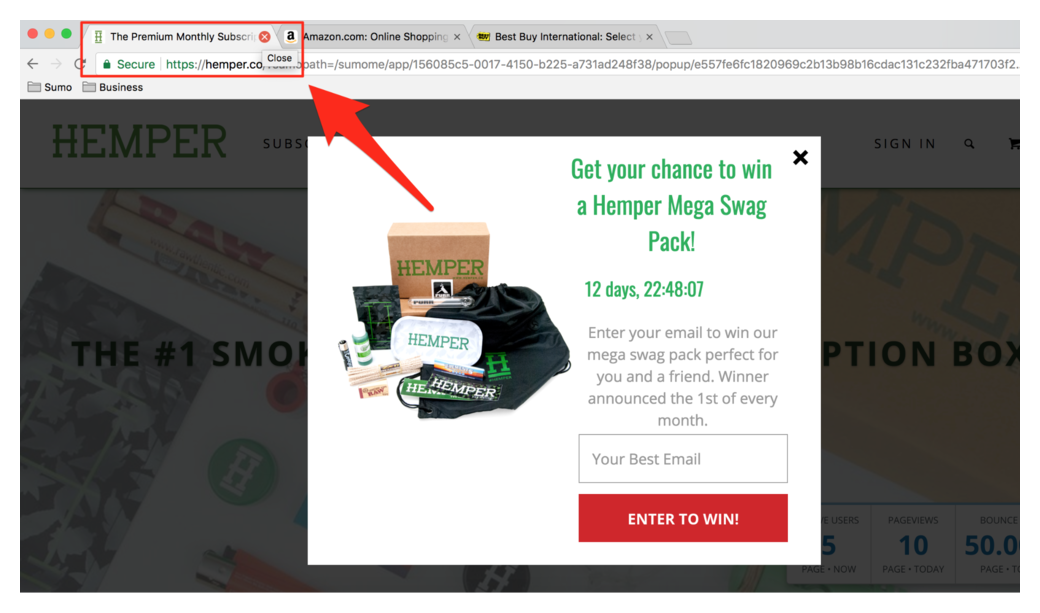
Best Ecommerce Popup ideas – Giveaway and Timer in PopUp

[Bonus 2] 41,008 email subscribers

Good things come in twos…

Two tacos are better than one. (Who only gets one taco, anyway?!)

Two high-fives are cooler than one.

And two bonus gifts are waaay more fun than one bonus gift.

Because we’re a fan of twos, we convinced Santa to drop off an extra after-hours gift.

Today, we’re back with your second bonus gift…

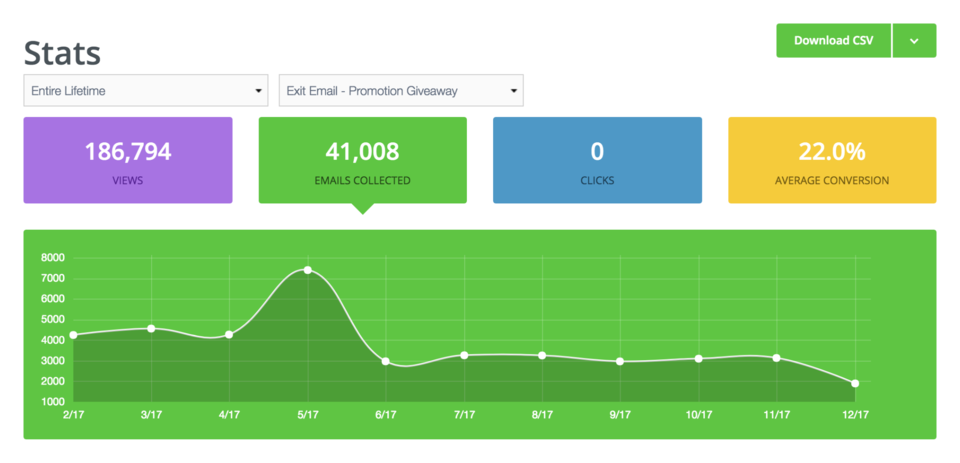
How Hemper used a Sumo exit intent popup to generate 41,008 leads.

With so many cool websites on the web, many of us have “TMTS” aka “Too Many Tabs Syndrome.”

It’s easy to jump from page… to page… to page.

But what if you could turn those people who are about to leave into email subscribers? Customers? Lifelong fans?

In this email I’m going to show you how Hemper took advantage of “TMTS” and got insane results:

  • Collected 41,008 subscribers
  • Generated a 22% popup conversion rate (11x higher than average)
  • Convinced readers who were just about to leave to give their email address

Hemper has grown their email list from 0 to 41,008 email subscribers (so far) in ten months by using one simple “exit intent” popup.

When a user mouses out of the Hemper website, the exit intent popup triggers.

To create an exit intent popup like this for your eCommerce business — and get a 22% conversion rate — there are 4 key conversion elements you need:

  1. Giveaway offer. Giveaways perform out-of-this-world taco lovin’ crazy. Don’t feel like giving anything away? No problem. You can convince people to subscribe with free goodies like ebooks, software, or anything else. Think outside the box!
  2. Countdown timer. Update the timer monthly to show scarcity for giveaways.
  3. Description. If you’re doing a giveaway, tell people when the winner is announced. If you’re not doing a giveaway, write mouth-watering explanation text on why the goodie you’re offering is valuable.
  4. Picture. Show people what they can win or what they’re getting.

To make setting up a winning exit intent popup a breeze, here’s how you can use Sumo to set up the same exact popup as Hemper:

1. Log into Sumo and create a new List Builder form.

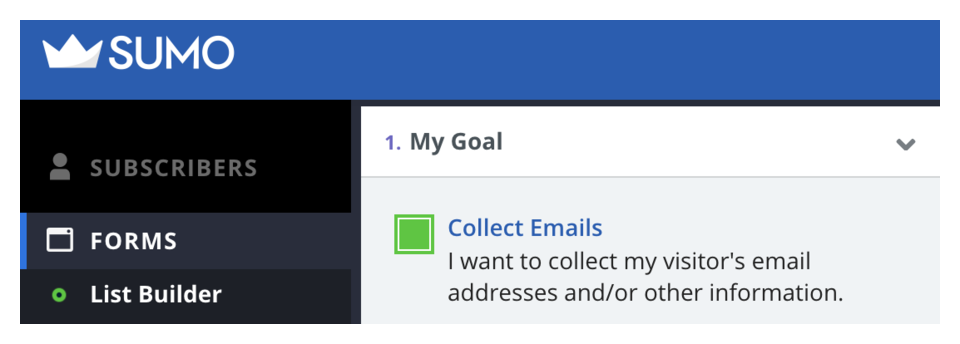
2. Set your Goal to “Collect Emails”.

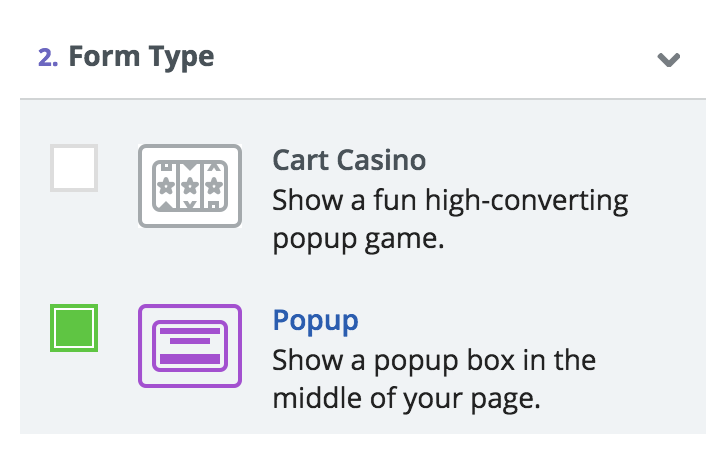
3. Set your Form Type to “Popup”.

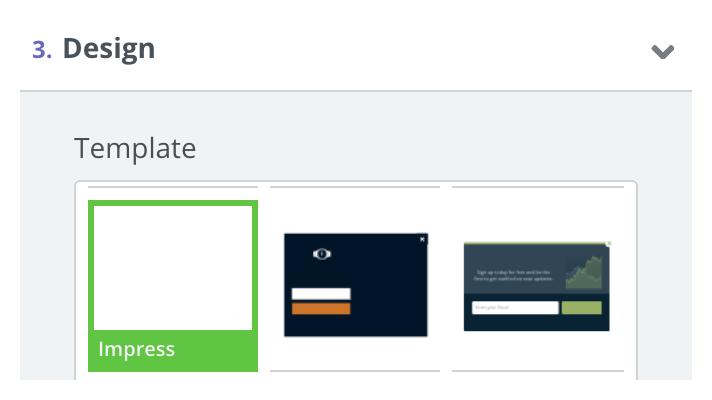
4. Set your Design to Sumo’s “Impress” template (Hemper used this template so they didn’t need to pay a designer to do design work).

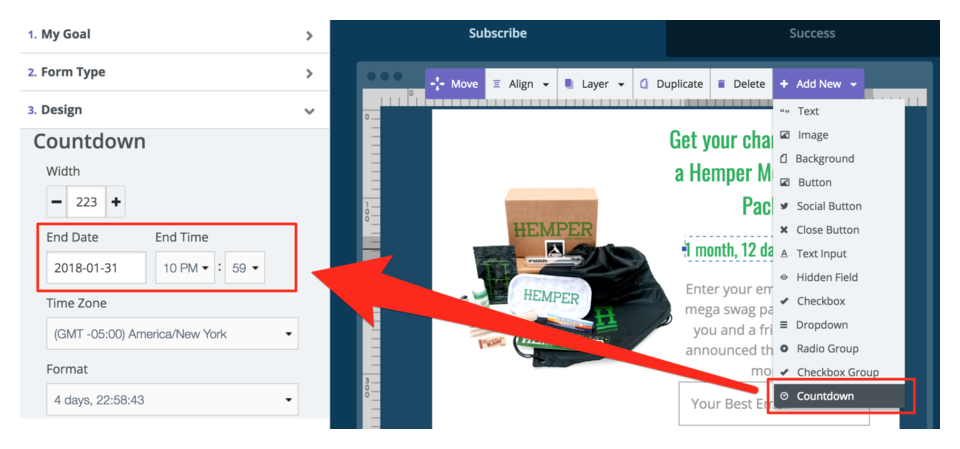
5. If you’re doing a monthly giveaway, add a “Countdown” to your design, then set your End Date to be at the end of the current month.

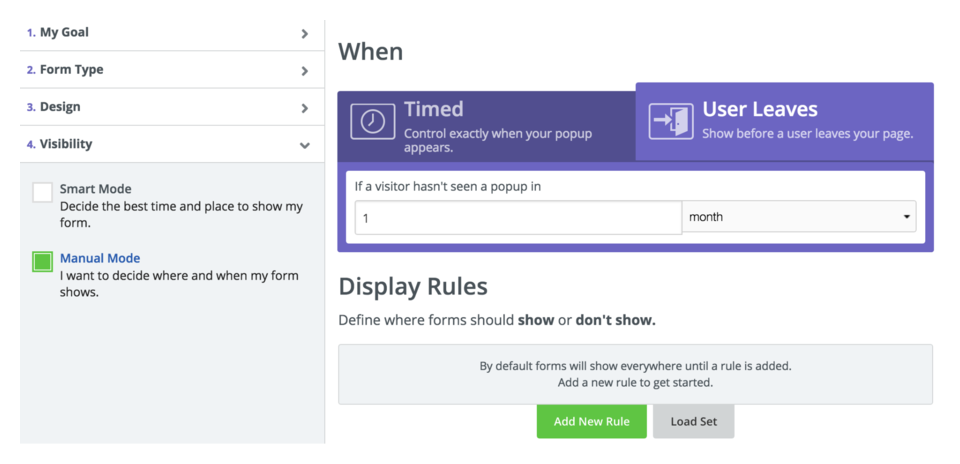
6. Set your Visibility to “Manual Mode” and only show to people who haven’t seen a popup in 1 month (Hemper does this so repeat visitors don’t get annoyed).

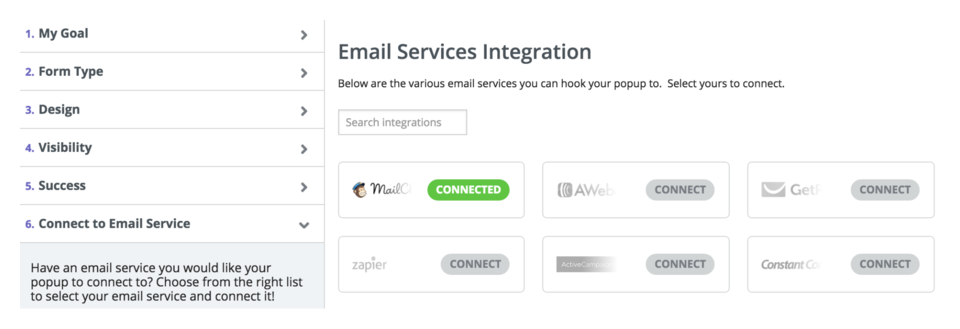
7. Connect your email service provider so you can email your leads with content, offers, and more giveaways. Or, use Sumo Message Center to send emails to your subscribers without spending money on a separate email service provider.

With this one simple exit intent popup, Hemper gets thousands of new emails leads EVERY month.

The best part…

All Hemper has to do is change the countdown timer at the start of each month.

This 5 second task resets the giveaway and continues generating thousands of email leads.

To get access to the same exit intent technology and template Hemper used to build this popup, click here to create the popup in Sumo.

Chris “Closing Extra Tabs” Von Wilpert

Chief Content Sumo

Story of how Twilio grew into a huge company

A story on how Twilio grew from $0 to $2.94 Billion…

How these 3 growth hacking frameworks helped me build loyal community and 21x my sales (step by step). This is a name of the master-class I speak on various offline events. People say – for a very long time they haven’t attended such a valuable master-class. Want me to speak in your city? Just hit “Reply” and let me know. And now let’s get back to the today’s growth hack.

In 2007, Jeff Lawson and 2 other guys founded Twilio.
They wanted to provide voice APIs, like to a dozen of other odd startups in this space.
Investors said it won‘t fly: wrong product, wrong audience.

Today their company is worth $2.94 Billion.

What steps did they take to achieve $2.94 Billion?

In 2008, they launch their product right after the 2008 financial crisis had hit.
Nobody knew them and nobody trusted them. So the first app, RickRoll – based on their API, they create by themselves.
This app gets major press coverage and Twilio is noticed by investor Dave McClure.

In 2009, they raise $4.7M.
Unlike other startups in this space, they hyper-focused on developers, providing a simple way to add voice calls in their businesses.
They were growing a community of developers. Here‘s how:
1. They hire a traveling team of developer evangelists.
2. Sponsor hackathons.
3. Publish world-class documentation on the website.
4. Offer in-depth coding tutorials on the blog.

In 2010, they allow web app developers to add SMS-based functionality to their web apps.

In May 2010, at the TechCrunch Disrupt hackathon, GroupMe app uses Twilio‘s text messaging product to facilitate group chat. Eventually, GroupMe is acquired by Skype for $85 million.
The success of GroupMe was the inspirational story that helped cement Twilio’s story in the app ecosystem.

In 2010, 500 Startups earmarks $250,000 for a Twilio Micro Fund, which invests in startups using Twilio.

In November 2010, they raise $12M.

In March 2011, AppSumo creates a discounted bundle of SaaS products that includes credit for using Twilio.

In July 2011, They offer developers the option to use all IP communications as well as traditional phone and mobile networks.

In October 2011, when Uber is still a tiny company, they join Twilio. Fast forward 5 years – they will pay over $30M/year to Twilio.

In December 2011, Twilio raises $17M (Series C) to expand the communications platform worldwide.

In February 2012, Twilio lets iOS app makers add VoIP as a feature.

In July 2012, they activate global SMS service.

In December 2013, SendGrid announces tie-ins to the popular Twilio APIs that enable SMS text and voice integration in mobile apps.

In June 2013, Twilio raises a $70 million Series D.

After that, they started to acquire other startups.

In 2016, IPO – They raise $150 million at a $1.2 billion valuation.

In 2017, their company is worth $2.94B.
Interesting fact: they only have 4% annual churn in their customer base.

P.S. If you want to 100x your revenue/conversions/traffic/retention/traction urgently grab all my growth hacks and ebooks instantly here.

1-click forward this to your friend via email … or via Facebook.

Source: gigaom.com
Created by Aladdin Happy. Copy edited by: Eric Sundal (he is a great growth hacker)

from the latest Apple Event

“There’s lots of ways to be as a person. And some people express their deep appreciation in different ways. But one of the ways that I believe people express their appreciation to the rest of humanity is to make something wonderful and put it out there. You never meet the people, you never shake their hands, you never hear their story or tell yours, but somehow, in the act of making something with a great deal of care and love, something is transmitted there. And it’s a way of expressing to the rest of our species our deep appreciation. So, we need to be true to who we are and remember what’s really important to us. That’s gonna keep Apple, Apple. If we keep us, us”. Așa a început evenimentul 🙂

template to DEMO Path

For you to build your sales process, you need to identify a Core Customer profile to go after and prospect against.

Once you have that, here’s a sample email you can use to reach out cold and kick off the conversation.

Subject: quick request

Hey [first name],

I hope this email finds you well! I wanted to reach out because [explain how you got their contact information and how you relate to them: talked to a colleague, saw your company online, etc.].

[Name of company] has a new platform that will help (your team at) [organization name]. [One sentence pitch of benefits].

I know that [our product] will be able to help [name of your company] [insert high level benefit here].

Are you available for a quick call [time and date]?

Cheers,

Signature

That should at least get your foot in the door…

… then you continue diving deeper with the prospect around the following info using the B.A.N.T. framework:

  1. Budget: Is there a budget set aside?
  2. Authority: Who is involved in the decision?
  3. Need: Do they have a problem?
  4. Timeline: Is this a now or later thing?
  5. Etc…

Once you’ve got that, then you want to schedule a demo for them with one of your Account Execs or what I like to call my “Product Specialists” (nicer word for salesperson :).

That’s the outbound sales model.

Go out there, add value, connect, identify needs and try and schedule them with a product specialist for a demo.

During the webinar I’m going to go over what makes a KICK ASS demo.

One where the prospect pulls out their credit card on the spot to get signed up and deployed.

But before that, you’ve got to do some homework…

  1. Who is your Core Customer?
  2. Do you have a list of them? (if not, I can help you below)
  3. Do you have a process for prospecting?
  4. Are you qualifying them?

During tomorrow’s webinar, I’m going to be breaking down the SaaS business model.

>>> Register here for The SaaS Model Masterclass

We’ll be covering what metrics matter most, and what sequence you should be attacking them in.

It’ll be a compressed version of my SaaS Academy Metrics but it will give you an actionable game plan to execute against.

More to come…

Dan “selling is my jam” Martell

good way to look at next goals and features for product dev

from Startups Live:

1. Assume no one has the answer (because the don’t) so all efforts are just around questions and how to answer them. It’s not “what feature do we build?” as much as “what don’t we know about our customer and how could a feature help us learn?”


[6:43]
2. Keep milestones incredibly small, short. Focus on what’s done by Friday, not this quarter. The fastest way to get lazy is to give yourself more time.

Two Things Required to WIN in SaaS

from Dan the man Martell:

(warning – long email ahead PACKED with value)

Want to know the non-negotiables / absolutes / must haves / can’t build a business without it things required in Saas?

Here they are…

Solve painful problems.
Solve it in a way the customer wants it solved.
Do this wrong and you’ll move sideways in frustration under the false belief that you’ve got something awesome and that any day now customers will realize it.

Nail this and you’ll have millions of people signing up for your software every month (FYI: Dropbox generated 4M referred signups in 15 months!)

Great SaaS companies solve really painful problems.

ONE:

So your solution needs to be a Painkiller!

Problems like:

Team collaboration/communication missteps
Marketing program inefficiency
Losing sales
Managing infrastructure
Financial risk
The opposite of that kind of solution is a Vitamin. Something that may make you better but doesn’t address an immediate pain.

Like taking a vitamin… it’s preventative.

Things like:

Individual productivity
Marketing presentations
Business reporting
Employee morale
Improving documentation
These are all great things to have in your business but they don’t stand out as solving an immediate painful problem.

Never forget that: People buy what they desire, businesses buy what they NEED.

For someone to buy from you, two of the following things need to be true:

The customer has to have a budget to solve it.
The customer has it as a goal to solve.
Their career depends on solving that problem.
The good news is that many times, the issue is not the product, it’s the positioning.

If you look at both lists above (Painkiller vs. Vitamin) you may notice that all I did was take the same list but reframed them…

… I’m talking about the same issues but with a different “lens”, or positioning.

If you’re having trouble selling your solution, it’s probably because you solve a painful problem for the customers but they can’t connect the dots based on how you explain it.

So, to fix the Product Positioning method by filling in the blanks:

Who is your primary customer?
What 2 problems do you solve?
What 3 ways do you do this?
Then use this format:

We help [type of customer] with [problem 1] and [problem 2] by [solution 1], [solution 2] and [solution 3]

This will do a few things:

It’ll get you crystal clear as to what problem you solve – that your customer cares about.
It’ll force you to differentiate why your solution is different from other solutions in the market.
It’ll keep things short and to the point.
Most entrepreneurs are horrible at explaining what they do, who they do it for, and what problem they solve.

This process will get you there.

TWO:

The second problem you need to fix is building your solution in a way the customer wants it solved.

I can’t tell you how many times I’ve been pitched a product and thought…

… who in the world wants to solve that problem that way?

I’m talking crazy things like requiring a company to:

Give a solution access to all their corporate emails
Migrate their current solutions to a new platform
Force them to complete several form fields to get something created
The better way is to work backwards from the customer’s pain, and solve it in an elegant way that…

Doesn’t require any setup work
Works with their existing products / solutions
Doesn’t change the way they work
Because if you don’t, that just adds friction and could slow down adoption.

What you want to do instead is ask them the IPO Question…

The question is simple:

“If you could wave a magic wand and have this problem solved by a software solution, how would you want it to work?”

Then sit back and listen…

Ask that question to 10 of your potential customers all with the same problem, and look for the 80% that’s shared amongst their answers.

That’s how you should solve their problem!

Now, that doesn’t mean you can just build that and win.

Nope, you’re not off the hook… you’ll still need to take into consideration other factors like:

Technology landscape
Competitive solutions
Business goals
But their answers will at least align your product to solve the problem in an elegant way that won’t add issues to your sales process which we cover in my next email.

So until then, be sure to complete the following:

Write out your positioning statement
Email your customers and ask them the IPO Question
Dan “more painful, more money” Martell

Republishing – check outlets doing republishing

This approach helped Sarah to get over 1,000 new subscribers in 60 hours with $0 spent

You’ve created an awesome article, it gained a bunch of shares and a good position on Google.
You invested a week to create it and 2 weeks to promote it.

Now the only way to grow more is to invest 3 more weeks into another epic article.
Right?

Wrong.

Sarah Peterson used a different approach, invested one day, and got over 1,000 new subscribers in 60 hours. All while spending $0.

The approach is called republishing.
Here’s how you can apply it:

1. Find media that accepts republishing.
Here’s a simple hack on how to do this fast:
Just Google:
YOUR_TOPIC “this article was originally published”

2. Send an email similar to this:
Subject: [Something eye-catching and not generic]
Body:
Hi [Editor name],

[Personal connection point]

I recently wrote an article about [topic] which my audience has enjoyed. I think [publication name’s] audience would love the article as well, because [why?].

I’ve included the article in the body of this email below, and if you’d rather check the original article out here is the link:

[link].

If you enjoy the article and think it would be a good fit, I would love to have it republished on [publication name].

Let me know what you think.

[Your name]

3. When your article gets accepted, ask to place a canonical tag to your original article (it helps Google to understand where the original article is):
<link rel=”canonical” href=”YOUR_URL_HERE”>

Source: sumo.com
Created by Aladdin Happy. Copy edited by: Eric Sundal (he is a great growth hacker)

lol now this is a growth hack – the Princess

// taken from a guide on Guides.co

‘Cause A Problem’ To Reach Out To Customers
The Hack – Cause a Problem Intentionally to Reach Out to Users

AARRR stage – Retention

Growth Problem – How to Get Users to Contact Customer Support

Haxplanation:

You’re intently staring at your screen, trying to get something important – no – crucial done. That one big task, which will tip the balance of your day’s productivity on the ‘getting shit done’ scale. And then your SaaS app crashes. OMG! WTF! NOOOO!!!

But then… As if by magic, you see an email pop up in your inbox from the Customer Success team of this already-foresaken app developer (which is now on your ‘to unsubscribe as soon as I find a suitable alternative’ list). In a very excited, slightly self-indulgent tone, the mail points out that their system has picked up on a problem with your app instance but the issue has already been fixed by their developers.

They also offer you a 30% discount on their annual subscription as an apology. “WOW! That’s some pretty outstanding customer support” you think and straight-away reply thanking them for saving your day. You then promptly take the app off your ‘to unsubscribe as soon as I find a suitable alternative list’ and purchase their annual plan. In short, you are now a BELIEVER.

But guess what? You just got Growth Punk’d! (now THAT would be a cool show)

Just Hack It:

Wha?! Let me repeat that. Growth. Punk’d.
“But, why? They seemed so nice!”
Uh-huh, that’s what they all say. Anyway, you have just experienced a very clever hack from the ‘customer success as marketing’ playbook
If you think about it, it’s Psychology 101: save the princess, be the hero. And that’s exactly what you are now. A princess…
Now that you know, don’t be so gullible next time. Look after yourself in that gangster’s paradise a.k.a. the SaaS startup world
And definitely have a think about whether you can ethically replicate this hack for your own users
Just be careful how you do it – the last thing you want is to lose any customers this way. Not everyone is as gullible, princess…
Source or Inspiration:

SaaS Marketing: 21 Growth Hacks to Test Today